Predictive Quality Engineering: Anticipating Release Risk Before It Happens
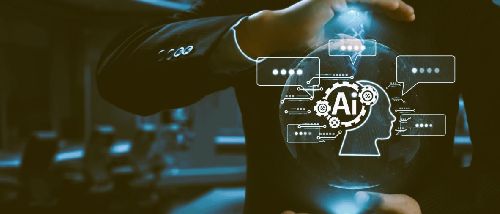
<style>.article-image{display:none}</style><div class="bigdata-services-area p-5 mb-5 bg-eef6fd"><div class="row align-items-center"><div class="col-lg-7 pt-4"><h4>Introduction:</h4><p>AI is already a daily companion for software teams. Developers use GitHub Copilot / Claude, Cursor or any Ai Agent to write code, suggest test cases, and accelerate implementation. Copilot understands context, learns patterns, and improves productivity by working alongside engineers rather than replacing them. </p><p><strong>This raises an important question for Quality Engineering</strong>: </p><p><i>If AI can assist developers in writing code and tests, can it also help teams anticipate release risk before software reaches production?</i></p><p><strong>Predictive Quality Engineering is the answer to that question.</strong></p></div><div class="col-lg-5 pt-20"><img src="/uploads/pqe_3289deb328.jpg" alt="pqe" caption=""></div></div></div><h4>From AI-Assisted Coding to AI-Assisted Quality</h4><p>AI Agents changed how developers work by understanding:</p><ul><li>Code context</li><li>Patterns across repositories</li><li>Developer intent</li></ul><p>It suggests implementations, flags inconsistencies, and accelerates delivery. Over time, teams learned to trust it not blindly, but as a capable assistant. <br>Quality Engineering is now at a similar point. <br>Instead of AI only helping <i>write tests</i>, we can ask it to help us <strong>understand risk</strong>.</p><h4>Why Traditional QA Signals Fall Short</h4><div class="row mb-3"><div class="col-md-6"><p>Traditional QA models revolve around execution:</p><ul><li>Tests run after code is written</li><li>Results are reviewed near release time</li><li>Decisions are made under time pressure</li></ul></div><div class="col-md-6"><p>These signals are useful, but incomplete. They do not account for:</p><ul><li>Risk introduced by late pull requests</li><li>Repeated instability in specific modules</li><li>Patterns that only emerge across multiple releases</li></ul></div><div class="col-md-12"><p>As a QA Lead, I've seen releases go out with green dashboards and still break critical flows. <br><i>The issue is not missing tests; it is missing context. Pass/fail signals tell us what happened. They do not tell us what is likely to happen next.</i></p></div></div><h4>Why Pass/Fail Is No Longer Enough</h4><p>Modern delivery moves fast. Code changes are frequent, release cycles are compressed, and systems are deeply interconnected. In this environment, binary test outcomes offer limited value.</p><p>Passing tests confirm what worked in controlled conditions. They do not explain:</p><ul><li>How risky a change is</li><li>Whether similar changes failed in the past</li><li>How stable the system is under real usage patterns</li></ul><p>Quality needs to move beyond execution status toward <strong>risk awareness</strong>.</p><h4>What Predictive Quality Engineering Means</h4><p>Predictive Quality Engineering applies AI to learn from historical and real-time engineering signals and estimate the likelihood of failure.</p><div class="row mb-3"><div class="col-md-6"><p>Instead of answering:</p><ul><li>Did tests pass?</li></ul><p>It helps answer:</p><ul><li>Given everything, we know, how risky is this release?</li></ul></div><div class="col-md-6"><p>AI Agent evaluates signals such as:</p><ul><li>Pull request size, timing, and affected areas</li><li>Test behavior trends, including intermittent failures</li><li>Frequency of last-minute changes</li><li>Historical post-release issues linked to similar changes</li></ul><p>The outcome is not a defect list, but a <strong>risk profile.</strong></p></div></div><h4>A Practical Narrative: Asking AI the Right Question</h4><p>Imagine a QA reviewing a release candidate. <br>All tests are green. No critical defects are open. On paper, the release looks healthy.</p><div class="row mb-3"><div class="col-md-6"><p>Now imagine asking an AI system a different question:</p><ul><li>Based on past releases, how confident should we be about this one?</li></ul><p>The AI responds with insights such as:</p><ul><li>A late pull request modified a high-impact authentication flow</li><li>Similar changes previously caused production incidents</li><li>Playwright tests covering this area have shown intermittent failures across recent cycles</li><li>This release has higher-than-normal code churn close to the cutoff</li></ul></div><div class="col-md-6"><p>The QA Lead now has evidence to recommend:</p><ul><li>Targeted regression testing</li><li>Additional validation on critical flows</li><li>A controlled rollout or feature toggle strategy</li></ul><p>The release proceeds not delayed, but <strong>better informed</strong>. <br>AI in quality engineering is not about replacing human expertise. It acts as a co-pilot, continuously analyzing signals that are difficult to correlate manually.</p></div><div class="col-md-12"><p>None of these signals independently justify blocking a release. Together, they form a risk narrative.</p></div></div><div class="bigdata-services-area p-5 mb-5 bg-eef6fd"><div class="row"><div class="col-md-4"><h4>From Test Automation to Quality Intelligence</h4><p>Automation helped us execute faster. <br>AI helps us <strong>understand better</strong>.</p><p class="mb-0">This shift moves QA from:</p><ul><li>Verifying correctness</li></ul><p class="mb-0">To:</p><ul><li>Anticipating failure</li></ul><p>Quality becomes a continuous signal, not a final gate.</p></div><div class="col-md-4"><h4>Why This Matters to Organizations</h4><p>Predictive Quality Engineering delivers tangible value:</p><ul><li>Fewer late-stage surprises</li><li>Reduced production incidents</li><li>Faster, more confident releases</li><li>Stronger alignment between engineering and leadership</li></ul><p>Quality becomes a business enabler rather than a release constraint.</p></div><div class="col-md-4"><h4>Looking Forward</h4><p>The trajectory is clear:</p><ul><li>AI understands code today</li><li>AI understands tests tomorrow</li><li>AI understands release risk next</li></ul><p>Predictive Quality Engineering is not a distant vision.</p><p>It is the natural evolution of how AI already supports software teams.</p></div></div></div><h4>Conclusion</h4><p>AI Agents showed us that AI works best when it augments human expertise. Predictive Quality Engineering applies the same principle to software quality. <br>By asking better questions and learning from real engineering signals, AI helps teams anticipate risk rather than react to failure. <br>Quality is no longer about catching defects late. <br>It is about <strong>seeing risk early and releasing with confidence</strong></p>
If you are interested in exploring more on this topic please get in touch with us on insights@fintinc.com.